How to Fuel for a Half Marathon
You absolutely can “get through” a half marathon without putting much thought into fuelling. I know because I’ve done it.
For my earlier half marathons, nutrition was definitely more of an afterthought. I’d take a gel when I felt like I needed one, which usually meant I was already starting to feel tired. I was also using gels that I found really sickly and difficult to get down, so unsurprisingly I wasn’t particularly consistent with them.
When I ran the New York Half in March 2025, I approached it completely differently and it’s the approach that’s stuck.
I’d run 1:52 the previous October, and my goal for New York was sub-1:40. Obviously there was a lot of training between those two races, but New York was the first half marathon where I took my fuelling strategy just as seriously as my pacing strategy. I knew what I was eating beforehand. I knew exactly when I was taking my gels. Most importantly, I’d practised all of it before race day. I finished in 1:39
Fuelling wasn’t solely responsible for taking 13 minutes off my half marathon time, but it definitely meant I wasn’t making the race unnecessarily harder by turning up under-fuelled or waiting until I was already fading before trying to fix it.
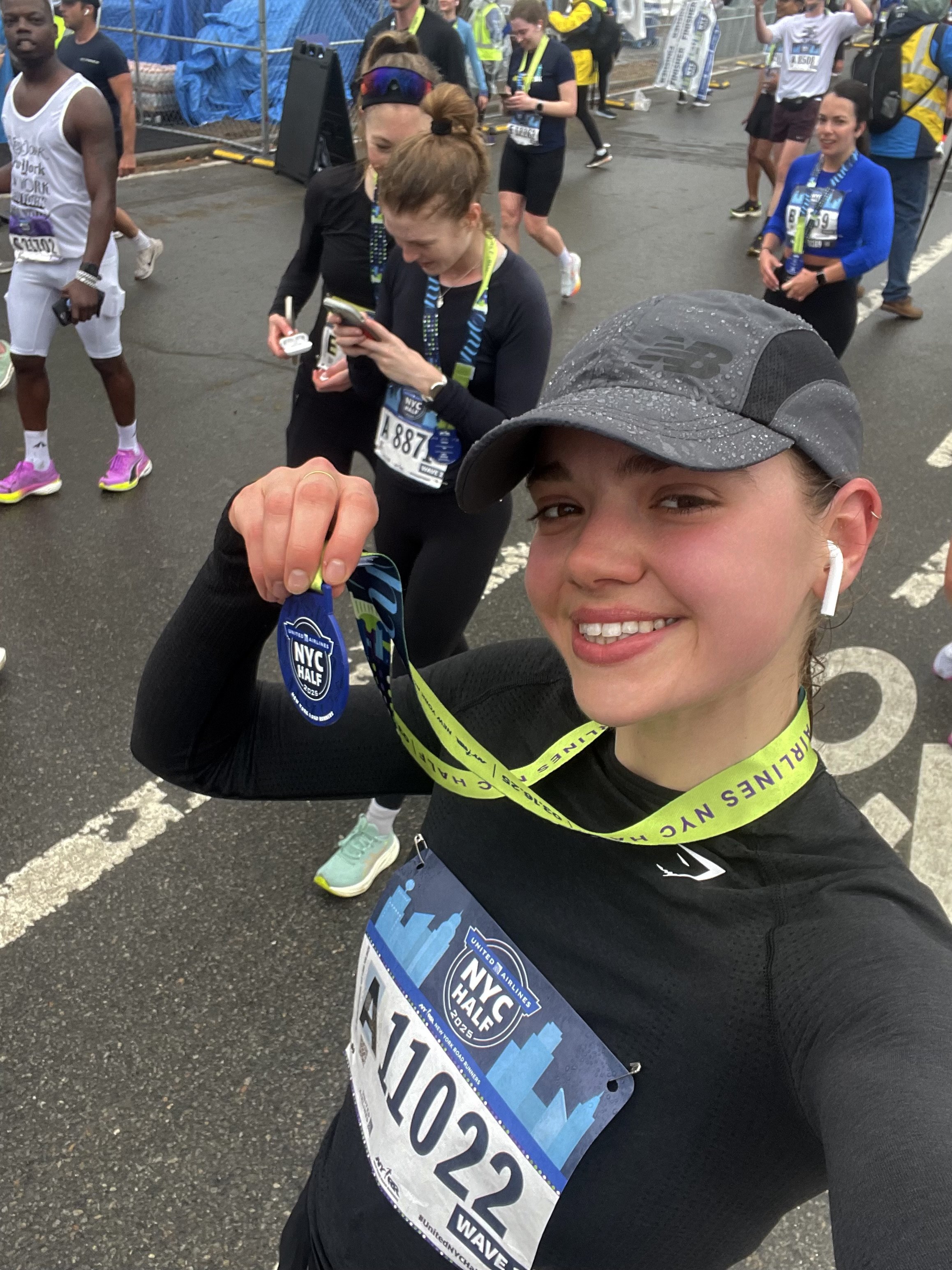
New York Half Marathon 2025
Why do you actually need carbohydrates?
Carbs are an important fuel source when you’re running at the intensity you’d typically race a half marathon at.
Your body stores carbs as glycogen.Those stores aren’t unlimited, so starting the race well fuelled and taking carbs during longer efforts can help support your energy availability as the race goes on.
For exercise lasting longer than an hour, sports nutrition guidance recommends 30–60g carbs per hour as a useful range for many endurance sessions and races. In normal language: you’re trying to avoid getting to 16 or 17K and suddenly wondering where your legs have gone.
And that’s the biggest change I made with my own fuelling. I stopped waiting until I felt tired!!!
The 1–2 days before your half marathon
You don’t necessarily need to approach a half marathon with the same aggressive carb-loading strategy you might use before a marathon, but you do want to arrive at the start line with your carbohydrate stores well topped up.
A practical target I use for the day before a half marathon is around 5–9g of carbohydrate per kilogram of bodyweight, depending on the runner, their usual intake and what they can comfortably tolerate.
But this doesn’t mean sitting down the night before your race and attempting to eat the biggest bowl of pasta known to man
Spread your carbohydrate intake throughout the day.
Think:
bagels and bread
rice and pasta
potatoes
oats and cereal
bananas
jam and honey
juice or sports drinks if you’re struggling to get enough food in
I also tend to bring fibre down slightly the day before a race and avoid suddenly eating loads of foods I’m not used to. New York was a pretty good test of this because there was obviously a lot of food I wanted to try. The temptation to turn the day before the race into a New York food tour had to be resisted. I kept things fairly boring and familiar, including plenty of bagels and a simple marinara pizza (it’s not quite Rudy’s but New York Pizza definitely lived up to its name) and saved experimenting with everything else until after the race. The day before your half marathon is probably not the time to discover a new favourite food.
You’re topping up your carbohydrate stores, not trying to eat as much food as physically possible.
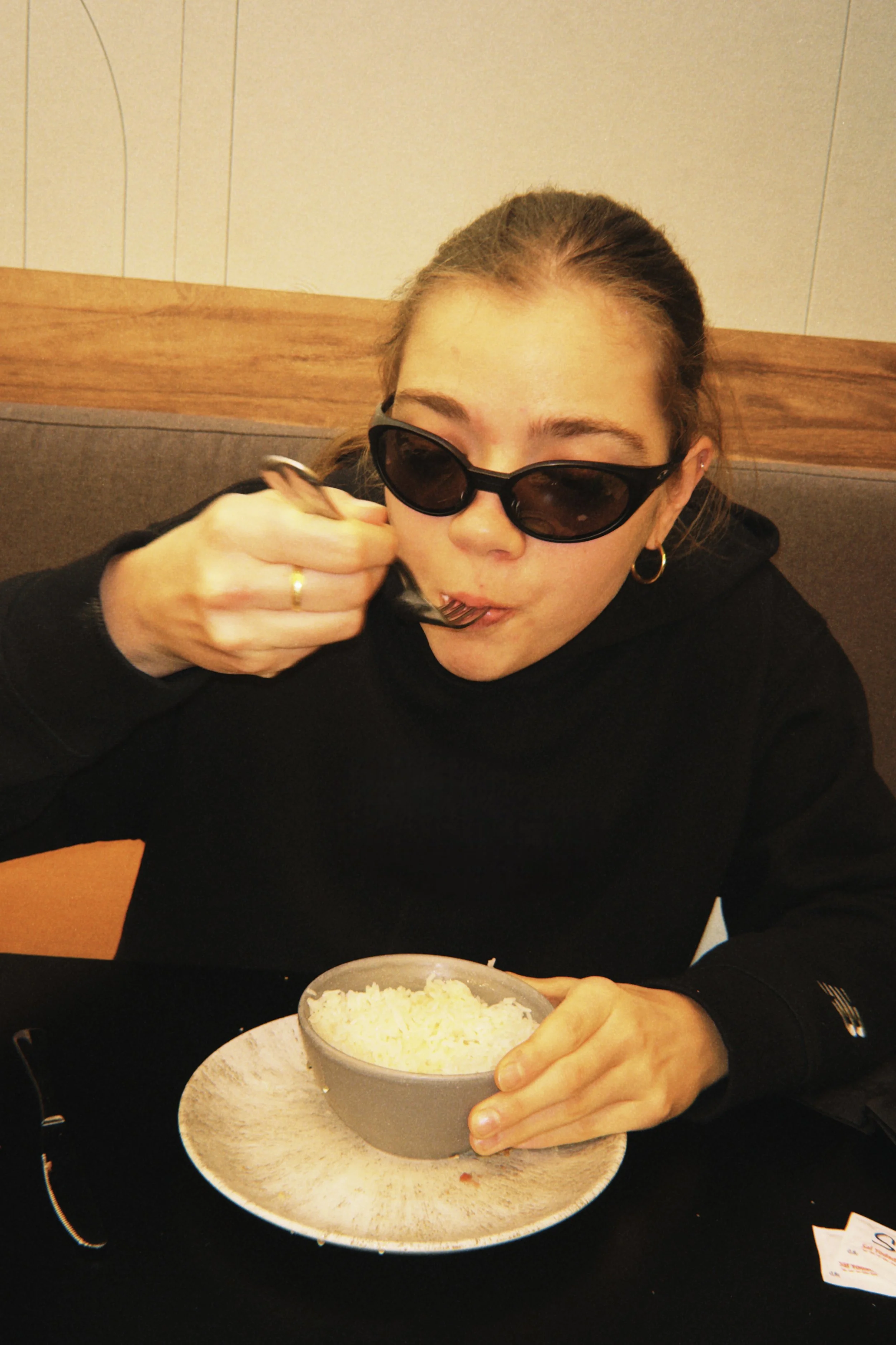
My famous basmati bowl pre Valencia Marathon 2025
What should you eat on race morning?
Your pre-race meal is another opportunity to top up carbs before you start. A useful guideline is around 1–3g of carbohydrate per kilogram of bodyweight, eaten roughly 2–4 hours before the race. The exact amount depends on your size, appetite, how much time you have before the start and, most importantly, what you know your stomach can tolerate!!!!
Carbs should be the main focus, while keeping fat and fibre relatively low
That might look like:
Porridge + banana + honey
or
Bagels with jam + banana + juice
or whatever carb-heavy breakfast you’ve already found works for you. The key word there is already.
For me it’s 100g of oats with plenty of honey and 1 banana, no more no less mwahhhh
Race morning is not the time to copy somebody else’s TikTok breakfast because apparently it’s the “perfect runner breakfast”.
If you’ve spent your long runs eating porridge three hours beforehand and it works brilliantly, there is absolutely no reason to suddenly reinvent it on race day.
You can also use a small carby top-up around 30–60 minutes before the start if you’ve practised doing so for example, a gel, banana, sports drink or some sweets
A prettier race morning breakfast
When should you start taking gels?
!!!! Before you feel like you need them !!!!
This is probably the biggest mistake I made when I started racing longer distances. I used to think a gel was something you took once you started feeling tired.
The problem is that fuelling is much better used proactively than reactively. You don’t want to wait until you’re already struggling and then expect one gel to suddenly bring your race back to life.
For most half-marathon runners, 30–60g of carbs per hour is a sensible range to work around.
But don’t just translate that into ‘X number of gels’. Look at how many carbs are actually in your gel.
Some contain around 20–25g, while others contain considerably more, so two different runners could take the same number of gels and actually consume very different amounts of carbs.
I personally use Maurten 160s because I’ve found they sit well with me. For New York, I had a fixed gel schedule that I’d already practised in training: regular gels every 6K, with an additional caffeinated gel late in the race around 17K. That was my practised strategy rather than a blanket recommendation for everyone. Your own intake should depend on the products you use, how long you expect to be running and how much carbohydrate you’ve actually practised tolerating.
The important part was that I wasn't negotiating with myself mid-race about whether I “needed” a gel yet.
It was 6K. Gel. 12K. Gel. And so on.
One less decision to make when you're trying to race hard.
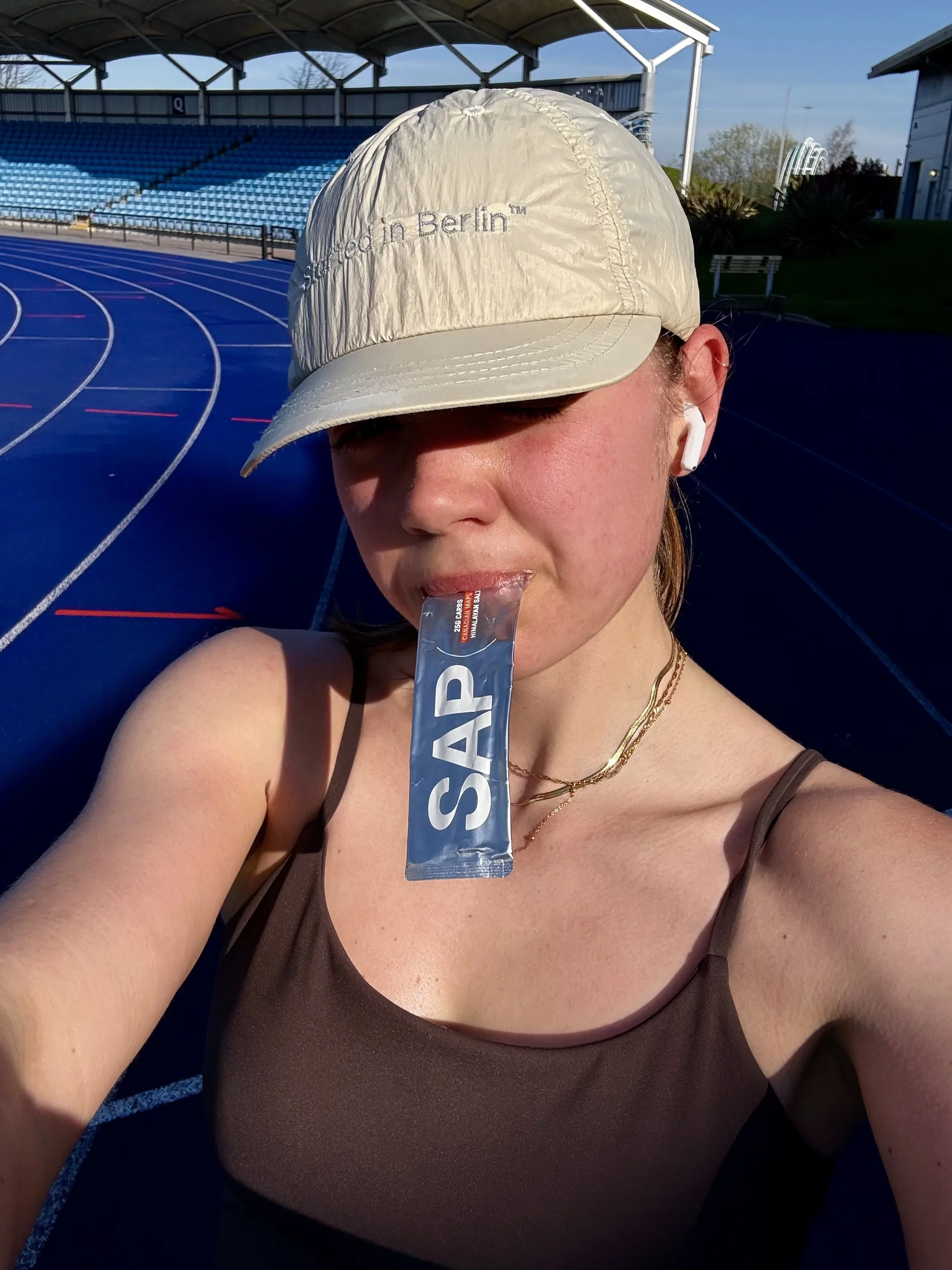
SAP or Maurten to the grave
Don't make race week weird
This is probably my simplest bit of advice.
You don't need a completely different diet because you're racing
You don’t need to spend the day force feeding yourself carbs or eating huge portions at every meal
You don't need to drink four litres of water the night before
And you definitely don't need to introduce five new supplements because somebody on Instagram told you they improved their PB
Increase your carbohydrate intake, keep the foods familiar, hydrate normally and use the same fuelling strategy you've already practised
Boring is pretty good the day before a race!!
Looking back at my earlier half marathons versus New York, I think the biggest difference was simply having a plan.
Previously, fuelling was reactive:
I'm getting tired, maybe I should have a gel.
By New York, it was just another part of the race strategy.
I’d increased my carbohydrates beforehand. I'd kept the foods familiar. I'd found gels I genuinely got on with. I'd practised the timing in training. And I knew when each one was going in before I even crossed the start line
That doesn't mean you need to obsess over every gram of carbohydrate to run a good half marathon.
But if you've spent weeks training to run 21K as well as you possibly can, it makes very little sense to get to race day and just hope your fuelling sorts itself out.
Eat enough carbohydrate beforehand, start fuelling before you feel like you need it, practise everything in training and keep race day as predictable as possible.